Stitched vs unstitched shalwar kameez: which to buy?
Stitched vs unstitched shalwar kameez comes down to one trade: control or convenience. Unstitched fabric lets you design every detail with your own tailor, but you have to find the cloth, get measured and wait in the queue. A stitched suit arrives ready to wear. Stitched to order sits in between, and for many men it is the most sensible choice.
This guide lays out how each route actually works, where each one shines, and the questions to ask yourself before you decide. No route is right for everyone, so it helps to be honest about your time, your tailor and how fussy you are about fit.
What “unstitched” and “stitched” actually mean
The words get used loosely, so it is worth being clear.
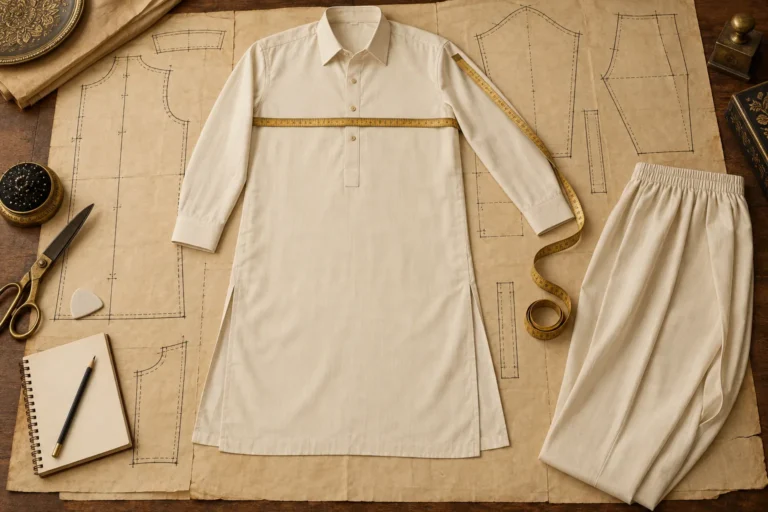
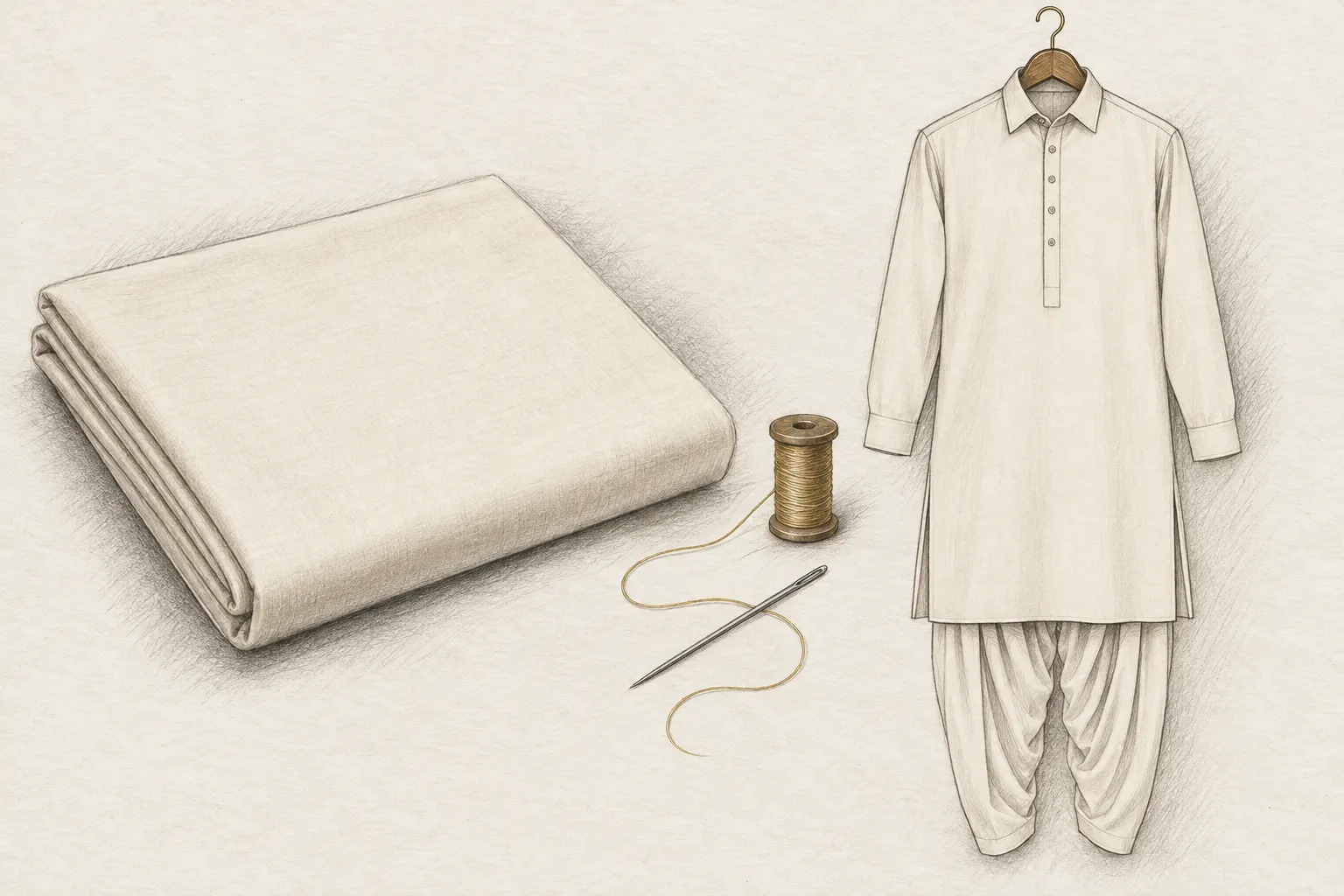
- Unstitched: you buy a length of fabric, usually enough for a kameez and shalwar, and take it to a tailor (a darzi) who measures you, cuts it and sews it. You choose the collar, cuffs, pockets and daman yourself.
- Ready-made stitched: a suit already sewn in a standard size and sitting on a shelf or in a warehouse. You pick a size and wear it, sometimes after a small alteration.
- Stitched to order: you choose the fabric and colour, give a standard size or your own measurements, and the suit is cut and sewn for you after you order. This is how every Moosa & Sons suit is made, by our tailors in Karachi.
Most comparisons only talk about the first two. The third option changes the maths quite a bit, so keep it in mind as you read.
The case for unstitched shalwar kameez
Buying unstitched has been the normal way for generations, and it still has real strengths.
Full control over the design
With your own fabric and your own darzi, every detail is your call. You can ask for a particular collar, a hidden placket, a side pocket on one side only, or a daman shaped exactly like your favourite old kameez. If you enjoy those decisions, unstitched is satisfying.
A tailor who already knows you
A good family tailor who has stitched for you for years is valuable. He knows your shoulders, your posture and your preferences without asking. If you have that relationship, it is a strong reason to keep buying fabric.
Fabric you have seen and touched
Choosing cloth in a shop means you can feel the weight and see the colour in daylight. For fabrics where texture matters, like a fine boski or a heavy khaddar, some men simply like to handle it first.
The downsides of going unstitched
The same freedom comes with work that is easy to underestimate.
- Two separate jobs. First you find the fabric, then you find time to visit the tailor, often more than once for measuring, trial and collection.
- The festival queue. Before Eid and during the wedding season, tailors get booked up and stop taking new orders well ahead of time. Anyone who has chased a darzi the night before Chand Raat knows the feeling.
- Results depend on one person. If your regular tailor moves, retires or is having an off week, the fit can change from suit to suit.
- Leftover decisions. Buttons, thread colour, collar shape and lining all need choosing. Fun for some, a chore for others.
The case for stitched shalwar kameez
Ready-to-wear removes nearly all of that effort. You choose, you receive, you wear. For busy men, or anyone who does not have a tailor they trust nearby, that convenience is the whole point.
The usual weakness of off-the-shelf stitched suits is fit. Standard sizes are built around an average body, and very few people are average everywhere. If your shoulders are broad for your chest, or your arms are long for your height, a shelf size will be close but not quite right.
Stitched to order: the middle path
This is where stitched to order earns its place. You get the convenience of buying a finished suit without the compromise of a shelf size. You pick the fabric and colour online, choose S, M, L, XL or XXL, or enter custom measurements: chest, shoulder, sleeve length, kameez length, collar and shalwar length, with a notes box for anything else the tailor should know.
The suit is then cut from your chosen fabric and sewn for you in Karachi. Before stitching starts, we call you to confirm the order, the size and the dispatch date, so there is a real conversation before any scissors touch the cloth. Payment is cash on delivery across Pakistan.
If you decide to go the custom route, take a few careful minutes with a tape first. Our step-by-step guide to taking shalwar kameez measurements covers each of the six numbers, plus the easier trick of measuring a kameez that already fits you.
Stitched vs unstitched shalwar kameez: how to decide
Instead of a general verdict, run through these questions. Your answers will usually point clearly in one direction.
Do you have a tailor you trust?
If yes, and you enjoy the process, unstitched still makes sense for many of your suits. If no, or if your tailor is unreliable at busy times, a stitched to order suit removes the gamble.
How much time do you have?
Fabric shopping plus fittings takes several trips. Ordering online and getting a phone call to confirm takes one sitting. If an occasion is close, look at our Eid shalwar kameez guide for picking the right suit and planning around the busy period.
How unusual is your build?
If shelf sizes never fit you, either unstitched or custom measurements will serve you better than a ready-made standard size. Custom measurements give a similar result to a tailor visit without the trips.
How specific is your design taste?
If you want a very particular, one-off design, a personal darzi gives you the most freedom. If you want a clean, classic suit in a good fabric, a stitched to order suit covers you well, and you can still use the notes to mention fit preferences.
Is this suit for everyday or an occasion?
For daily wear and office, convenience usually wins: you want several reliable suits without much fuss. For a once-in-a-lifetime outfit such as your own nikkah, some men prefer the full custom experience with their tailor, while others are glad to skip the stress entirely.
Fabric matters on both routes
The stitched or unstitched choice is only half of it. The fabric decides how the suit feels and how much care it needs, whichever route you take.
- For occasions in warm weather: a soft, lustrous boski such as the Royal Boski in Cream looks dressed up without feeling heavy.
- For year-round use: a cotton blend holds its shape better than pure cotton and is easy to wear. The Cotton Blend in Navy Blue is a dependable everyday option, and you can browse more in our all-season collection.
- For winter: khaddar is a thick, warm handloom-style fabric with a pleasant texture. The Khaddar in Chocolate Brown is a good example.
Frequently asked questions
Is unstitched shalwar kameez cheaper than stitched?
It depends on your fabric shop and your tailor’s charges, and the two costs are paid separately. Count the fabric, the stitching, buttons and your own travel time together before comparing. The cheapest-looking option on paper is not always cheapest once everything is added up.
Does a stitched suit fit as well as one from my own tailor?
A standard ready-made size may not, because it is built for an average body. A stitched to order suit made from your own measurements comes much closer, since it is cut to your numbers rather than altered afterwards. Clear measurements and good notes make the biggest difference.
Can I order a stitched suit in my own size if I am between sizes?
Yes. Choose custom measurements instead of S to XXL and enter your chest, shoulder, sleeve length, kameez length, collar and shalwar length. Add any preferences in the notes for the tailor.
Is stitched shalwar kameez good for Eid shopping?
It is often the easiest way to avoid the last-minute tailor rush, since you are not depending on a local darzi’s queue. Order with enough time in hand and confirm the dispatch date on the call we make before stitching.
Finding the right fit for you
The stitched vs unstitched shalwar kameez question has no single right answer. If you love your darzi and enjoy the process, keep buying fabric. If you want a well-fitting suit without the trips and the queue, browse our stitched to order shalwar kameez, pick a standard size or enter custom measurements, and pay cash on delivery anywhere in Pakistan.
Still weighing it up? Ask us anything on WhatsApp at +92 311 1762961.