Khaddar shalwar kameez for men: a winter guide
A khaddar shalwar kameez for men is one of the most practical things you can own once the weather turns cold. Khaddar is a thick, slightly coarse fabric with a handloom character, and it keeps you warm on its own, so you are not forced to pile on layers every time you step out. This guide explains what khaddar actually is, how it feels to wear, how it compares with karandi and wool blends, and how to get the fit right when you order one stitched.
What is khaddar fabric?
Khaddar (often written khaddi or khadi) is a heavy, loosely textured cloth with a handwoven look. You can see and feel the weave: it is not glossy or slippery like a polyester blend, and it has a dry, slightly rough hand when it is new. That texture is part of the appeal. It looks honest and grounded, the kind of fabric your father or grandfather probably wore through the winter months.
Because the yarn is thicker and the cloth has more body, khaddar traps a layer of warm air close to the skin. That is why it has long been a winter favourite, from village chaupals to city offices.
How khaddar feels when you wear it
- Warm, not stuffy: it holds heat well but still lets the body breathe, so you do not feel sealed in the way you can in some synthetic winter fabrics.
- Firm drape: the kameez falls in a structured way rather than clinging. Shoulders look broader and the daman sits straight.
- Softens with time: a new khaddar suit can feel a little stiff. After a few washes it relaxes and becomes noticeably more comfortable.
- Matte finish: there is no shine, which makes it look relaxed and everyday rather than dressy.
Why choose a khaddar shalwar kameez for men in winter
The simple reason is warmth with very little fuss. A good khaddar suit handles a cold morning commute, a chilly evening at a relative’s house, or Jummah prayers in a breezy mosque courtyard without needing a sweater underneath. On colder days you can still add a shawl, a waistcoat or a jacket on top, and the fabric is heavy enough to hold its shape under them.
It is also forgiving. The thickness hides creases from sitting and the texture hides small marks, so it is a good choice for long days, travel and family gatherings where you will be sitting on floor cushions and getting up again many times.
Finally, khaddar simply looks good. It reads as traditional and a bit rustic, which suits weekends, village visits, winter weddings on the mehndi side, and casual Fridays. If you want something that feels rooted rather than flashy, khaddar does that very well.
Khaddar vs karandi vs wool blend
These are the three fabrics men usually compare when they shop for winter. They overlap, but each one does a slightly different job.
Khaddar
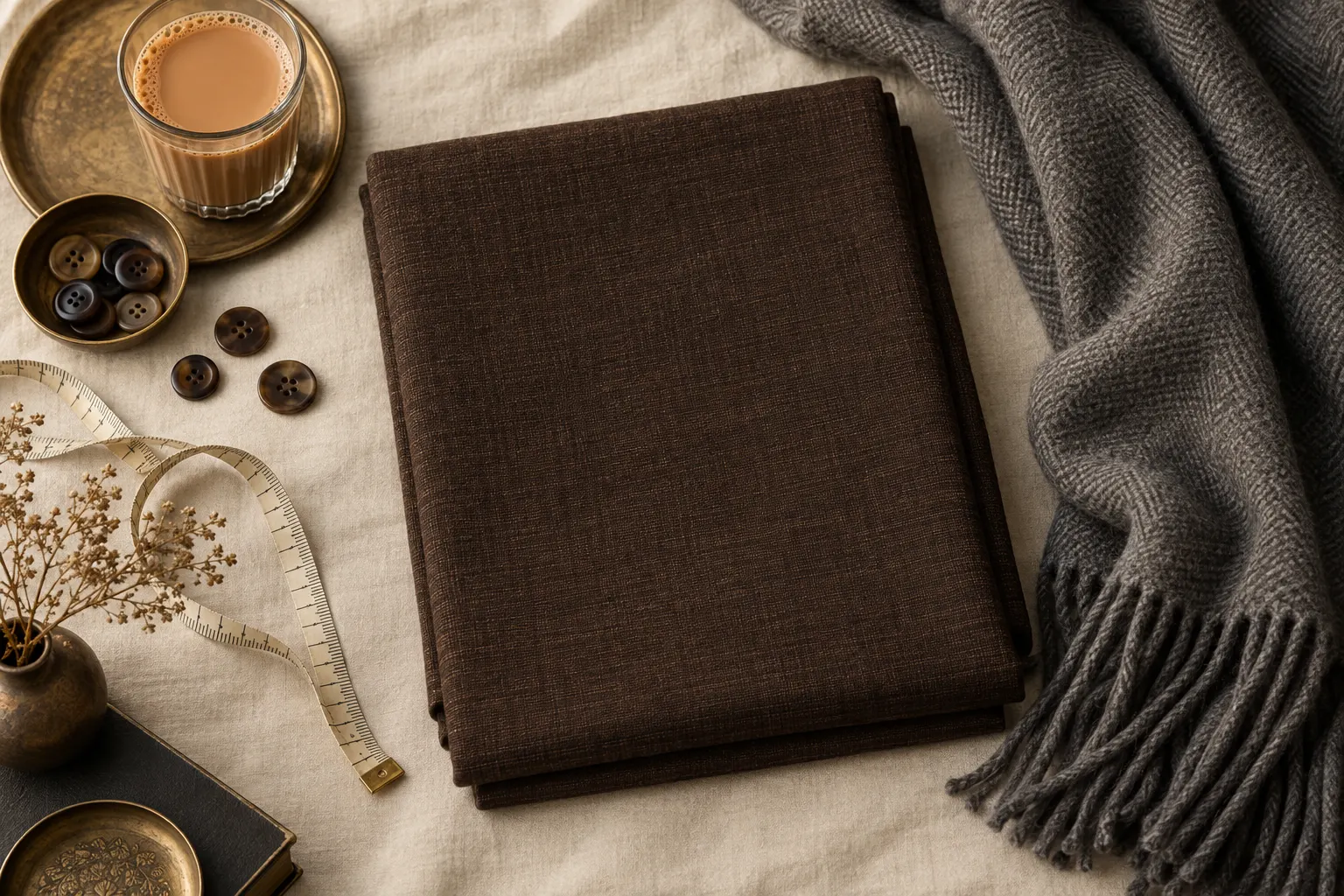
Thick, textured and matte. Best for everyday winter wear, casual outings and anyone who likes a traditional handloom look. Our chocolate brown khaddar shalwar kameez is a good example: a deep, warm shade that suits the fabric’s earthy character and hides daily wear well.
Karandi
Karandi has a fine, slightly grainy texture and a more refined finish than khaddar. It feels smoother against the skin and looks a little smarter, so it sits between casual and semi-formal. If you are deciding between the two, read our guide on whether karandi is a summer or winter fabric, then have a look at the olive green karandi suit to see how it compares in colour and finish.
Wool blend
Wool blends are the dressiest of the three. They have a smoother face and a more tailored drape, which makes them better for winter formals, a valima in December or an evening dinner. The jet black wool blend shalwar kameez is the one to look at if you need something sharp rather than relaxed.
A quick way to decide:
- Daily winter wear and a traditional look: khaddar.
- A bit smarter, still comfortable: karandi.
- Formal events and evening functions: wool blend.
Best colours for khaddar
Khaddar’s texture makes colours look softer and deeper than they would on a smooth fabric. Earthy and darker shades tend to suit it best, because they match the fabric’s natural, rustic feel.
- Browns and chocolate: the classic choice. Warm, practical and easy to pair with a black or tan shawl.
- Olive and bottle green: a little more distinctive while staying understated.
- Charcoal and slate: clean and versatile, good for office days.
- Mustard and rust: good for mehndi or a festive winter gathering if you want some warmth in the outfit.
On skin tone, think about contrast rather than rules. Men with deeper complexions often look sharp in medium to light earthy shades that create a gentle contrast, while lighter complexions tend to carry deep browns and greens with strong contrast. Both work. Pick the shade you feel good in, and if you are unsure, a mid brown is hard to get wrong.
Getting the fit right
Fit matters more with a khaddar shalwar kameez for men than with lighter summer fabrics. A thick cloth that is too tight pulls across the chest and shoulders and shows every strain line. A suit that is too loose looks bulky and heavy. A clean, comfortable fit with a little room is the target.
Standard size or custom measurements
Every Moosa & Sons suit is stitched to order by our tailors in Karachi. You can choose a standard size (S, M, L, XL or XXL) or enter custom measurements: chest, shoulder, sleeve length, kameez length, collar and shalwar length, along with notes for the tailor.
For khaddar, a few practical tips help:
- Leave a little room in the chest if you plan to wear a thin vest or thermal underneath on the coldest days. Mention it in the tailor notes.
- Keep sleeves at the wrist bone or just past it. Khaddar sleeves that are too long bunch up at the cuff because the fabric is stiff.
- Choose your collar for the occasion: a band (ban) collar looks neat under a waistcoat or shawl, while a shirt collar feels more casual and office-ready.
If you have never measured yourself for a kameez, our step-by-step size guide walks through each measurement. After you order, we call you to confirm the order, the size and the dispatch date before stitching begins, so there is a chance to correct anything that looks off.
Caring for a khaddar suit
Khaddar is a sturdy fabric, but a little care keeps it looking good for many winters.
- Wash it in cold or lukewarm water with a mild detergent. Very hot water can make thick cotton fabrics shrink or fade faster.
- Wash dark shades separately for the first few washes, as deep browns and greens may release some colour.
- Dry it in the shade rather than strong direct sun, which can fade darker colours over time.
- Iron while slightly damp on a medium to high setting. Thick fabrics press much more easily with a bit of moisture.
For a fuller routine, including how to keep a collar crisp and how to handle stains, see our guide on how to wash and iron a shalwar kameez.
How to style a khaddar shalwar kameez
Khaddar does not need much help. A few simple pairings work well:
- With a shawl: the most traditional look. A plain black, grey or tan shawl over a brown khaddar suit is hard to beat on a cold evening.
- With a waistcoat: a darker waistcoat over a lighter khaddar suit adds structure for a dinner or mehndi. Our guide to shalwar kameez with waistcoat combinations covers which colours pair best.
- With peshawari chappal: the natural partner for khaddar. Brown or black both work.
- With a jacket for travel: a simple zip jacket or bomber over khaddar is practical for road trips and early flights.
Frequently asked questions
Is khaddar good for winter?
Yes. Khaddar is a thick, warm fabric made for cold weather, which is why it is a natural choice for a winter shalwar kameez. It keeps you warm on its own on most cold days, and you can add a shawl or waistcoat when it gets colder.
Is khaddar the same as karandi?
No. Both are winter fabrics, but khaddar is thicker and more textured with a handloom look, while karandi has a finer, smoother finish that looks a little more refined. Khaddar suits casual everyday wear, and karandi leans slightly more towards smart occasions.
Does khaddar shrink after washing?
Thick cotton-based fabrics like khaddar can shrink a little if washed in very hot water or tumble dried on high heat. Washing in cold or lukewarm water and drying in the shade keeps that risk low.
Can I wear a khaddar shalwar kameez to a wedding?
It works well for relaxed winter functions such as a mehndi or a family dinner, especially with a waistcoat or shawl. For a formal barat or valima, a smoother fabric like a wool blend is usually the better pick, which looks dressier in photos and under lights.
Is khaddar itchy?
It is generally comfortable. New khaddar can feel slightly rough at first, but it softens noticeably after a few washes. If you have very sensitive skin, a thin cotton vest underneath solves it easily.
Find your khaddar suit
If you are shopping for a khaddar shalwar kameez for men, or still comparing winter options, start with our winter collection, where the khaddar, karandi and wool blend suits sit side by side. Every suit is stitched to order in Karachi, you can enter custom measurements for a proper fit, and you pay cash on delivery anywhere in Pakistan. Details on payment and delivery are on our shipping and returns page.
Have a question about sizing or fabric before you order? Message us on WhatsApp at +92 311 1762961 and we will help you choose.