Shalwar kameez for wedding: male guest and family guide
Choosing a shalwar kameez for wedding functions as a male guest or family member is about matching the suit to the event, the season and your role in the wedding. A dark, structured suit suits an evening barat, a lighter one suits a daytime valima, and the mehndi gives you room for colour. Close family should look a step more formal than guests, but nobody should outshine the groom.
Pakistani weddings are rarely a single event. Here is how to dress for each one without overthinking it, and without turning up to the barat in the same suit you wore to the mehndi.
Match the suit to the function
Each function has its own mood, time of day and level of formality. Dress for that, and half the decisions make themselves.
Mehndi
The most relaxed and colourful event. There is music, dancing and plenty of moving around, so comfort matters. Earthy greens, mustards and rich browns all look at home here. An olive green karandi shalwar kameez is a good example: festive without being flashy, and the textured fabric photographs well under warm lights. Keep the fit slightly relaxed so you can actually join in.
Nikkah
The nikkah is the religious heart of the wedding, and the dress code leans traditional: white, off white, cream and soft light colours. It is often a quieter, more dignified occasion than the barat. If you are the groom, or simply want a deeper look at this one function, our guide to choosing a nikkah dress for men goes into detail.
Barat
The barat is usually the most formal event, often in the evening, and it is where darker, richer colours come into their own. Black, navy and deep charcoal look sharp at night, especially with a waistcoat or prince coat on top. For a winter barat, a jet black wool blend shalwar kameez gives you warmth and a crisp, formal finish in one go.
Valima
The valima is hosted by the groom’s family and is often more relaxed than the barat, sometimes held in the daytime. Lighter, softer colours work well here. A cream royal boski shalwar kameez, with its gentle sheen, looks dressy without feeling heavy, and pairs easily with a darker waistcoat if you want more contrast.
Your role changes what you should wear
The same suit can be perfect for one person and slightly off for another. Think about where you stand in the wedding.
- Groom’s or bride’s immediate family: fathers, brothers and close uncles are hosts as much as guests. Aim one step more formal than the average guest: a well-fitted suit, a waistcoat or prince coat, and polished shoes.
- Close friends and cousins: you will be in many photographs and often helping out, so look smart but stay comfortable. A good suit with a waistcoat is usually enough.
- Guests: a clean, well-pressed shalwar kameez in a colour that suits the function is always correct. You do not need to compete with the wedding party.
One rule holds for everyone: avoid anything that looks like it is trying to match or outshine the groom. If you know what he is wearing, steer clear of the same colour and style.
Shalwar kameez for wedding season: summer or winter
Wedding season leans towards the cooler months, but plenty of weddings fall in the heat too. The fabric you choose should follow the weather as much as the occasion.
Winter weddings
Evening functions in winter can get properly cold, especially outdoors or in open marquees. Heavier fabrics like wool blends, karandi and khaddar keep you warm and hold their shape through a long night. You can see these options together in our winter shalwar kameez collection.
Summer weddings
Indoor halls are usually air conditioned, but you still have the journey, the photographs outside and the crowded entrance. Breathable fabrics like boski and cotton keep you comfortable. If you want a darker colour that works across seasons, a navy blue cotton blend suit is a reliable choice for an evening function without the weight of a winter fabric.
Colours that work for a male wedding guest
You do not need bright colours to look festive. At a wedding, rich, well-chosen shades tend to look more expensive than loud ones.
- Black and navy: formal, sharp and ideal for the barat or any evening event.
- Charcoal and grey: understated and easy to pair with almost any waistcoat colour.
- Cream, white and off white: right for the nikkah and daytime valima.
- Olive, brown and mustard tones: warm and relaxed, a natural fit for the mehndi.
On skin tone, think in terms of contrast. A light suit against deeper skin gives a bright, fresh look, while a dark suit gives a bold, formal one. Both work well; choose the effect that suits the function and the lighting. Evening venues with warm lights flatter rich, deep colours, and daylight flatters lighter ones.
Waistcoat or prince coat?
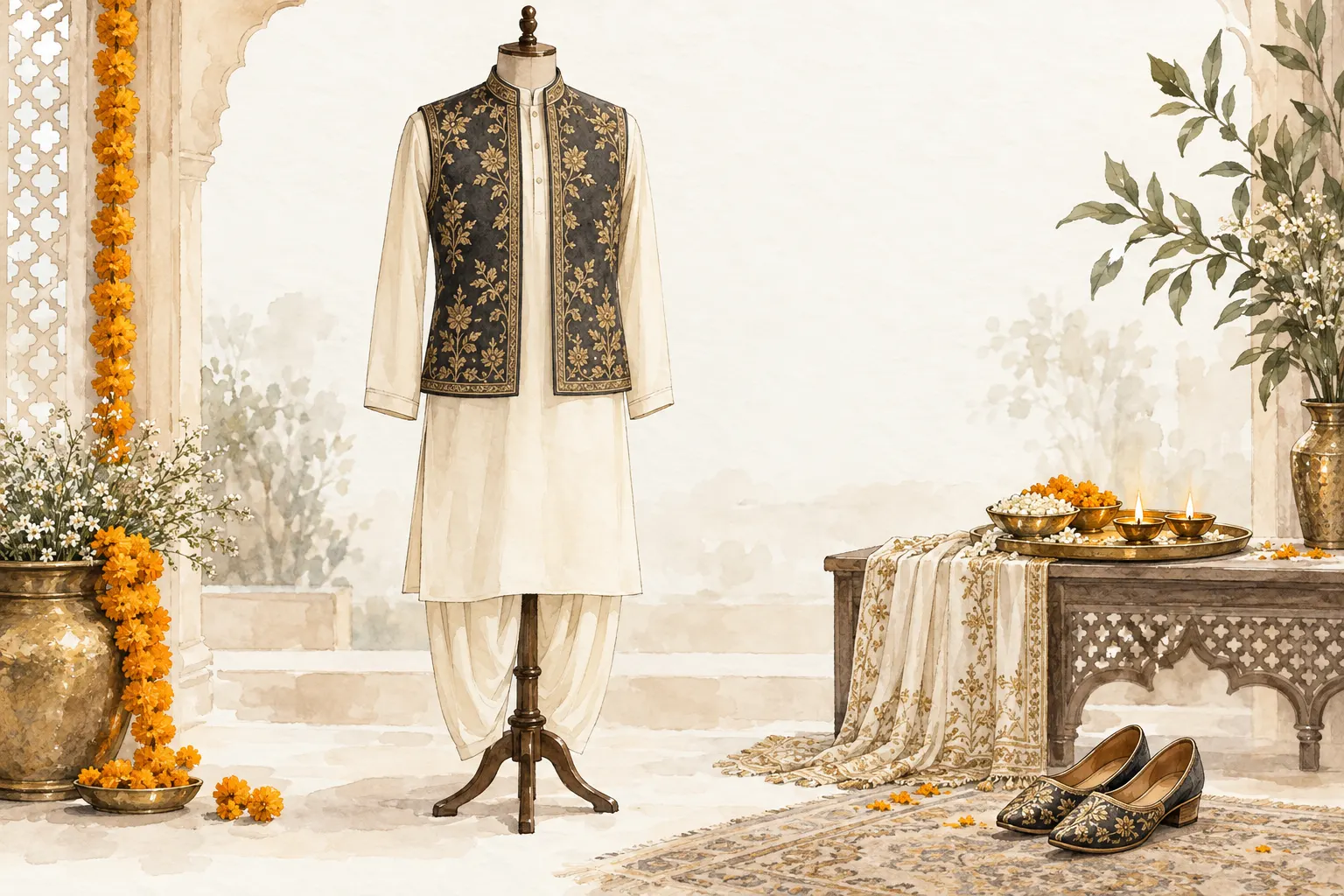
A plain shalwar kameez becomes a wedding outfit the moment you add a layer on top. A waistcoat is the lighter, easier option and suits most functions. A prince coat is more formal and fuller, and is often worn by the groom or close family at the barat or valima.
If you are deciding between the two, our comparison of a prince coat versus a waistcoat with shalwar kameez explains when each one fits best. Whichever you pick, make sure the kameez underneath fits properly, because a loose or long kameez will bunch under a fitted layer.
Coordinating brothers, cousins and friends
Matching outfits for the groom’s brothers or a group of friends are a fun touch, especially for the mehndi. The trick is to match the fabric and colour while letting each person get his own fit.
Because every Moosa & Sons suit is stitched to order, each person can choose a standard size or enter his own custom measurements, even when everyone is ordering the same suit. Collect everyone’s measurements early, use the notes for the tailor for any personal preferences, and place the orders together so nobody is left out at the last minute.
Fit details that show at a wedding
Weddings mean photographs, and photographs are unforgiving about fit. These are the details people notice:
- Shoulders: the seam should sit at the edge of your shoulder, not halfway down your arm.
- Sleeves: they should end around the wrist bone, so they do not hide your hands when you greet people.
- Collar: close enough to look neat, loose enough that you can breathe through a long dinner.
- Kameez length: consistent with the style you want, and short enough to sit well under a waistcoat.
- Shalwar length: it should break neatly at the ankle without dragging on the floor.
With custom measurements, you can enter chest, shoulder, sleeve length, kameez length, collar and shalwar length directly. Our guide to measuring for shalwar kameez shows how to take each one at home.
Shalwar kameez for wedding functions: your checklist
- List every function you are attending and note which are daytime and which are evening.
- Plan a different suit, or at least a different layer, for each major function.
- Choose fabrics for the season: warm blends for winter, breathable fabrics for summer.
- Check what the groom and close family are wearing so you do not clash.
- Take accurate measurements, and gather everyone’s if you are ordering as a group.
- Order well ahead of the first function, since each suit is stitched to order.
- Press everything and lay out shoes and waistcoats the day before.
Frequently asked questions
What colour shalwar kameez should a man wear to a wedding?
It depends on the function. Black, navy and charcoal suit the evening barat, white and cream suit the nikkah and daytime valima, and olive or brown tones work well for the mehndi. Avoid copying the groom’s colour if you know it.
Can I wear the same shalwar kameez to every wedding function?
You can, but it is worth changing for each major event because the same family and friends will see you at all of them. If you only have one suit, change the waistcoat or prince coat for each function so the look feels different in photographs.
What fabric is best for a winter wedding?
Wool blends, karandi and khaddar are the warmest options and hold their shape well through a long evening. A wool blend in a dark colour is especially good for a formal barat. For an indoor winter function, a medium-weight blend is usually enough.
Is shalwar kameez appropriate for the barat or should I wear a suit?
Shalwar kameez is completely appropriate for every wedding function in Pakistan, including the barat. Paired with a waistcoat or prince coat in a rich colour, it looks just as formal as a western suit, and often more at home.
Find your wedding suit
A good shalwar kameez for wedding functions starts with a plan. Dress by function, pick fabrics for the season, and leave enough time for stitching. You can browse every shalwar kameez in our range, choose a standard size or enter custom measurements, and pay with cash on delivery across Pakistan. If Eid is coming up before the wedding, our Eid shalwar kameez guide for men can help you plan both at once. For questions about fabric, colour or ordering for a group, message us on WhatsApp at +92 311 1762961.