Is karandi fabric for summer or winter?
Karandi is a winter fabric, though not a heavy one. So is karandi fabric for summer or winter? The short answer: it is made for the cooler months, from the first chilly evenings of autumn to the end of winter, and it feels too warm and too dry against the skin for a Pakistani summer afternoon.
That simple answer hides a few useful details, though. Karandi sits in an in-between spot on the fabric ladder, and where you live in Pakistan changes how much use you will get out of it. Below, we explain what karandi actually is, when it works, when it does not, and how to wear it well.
What karandi fabric actually is
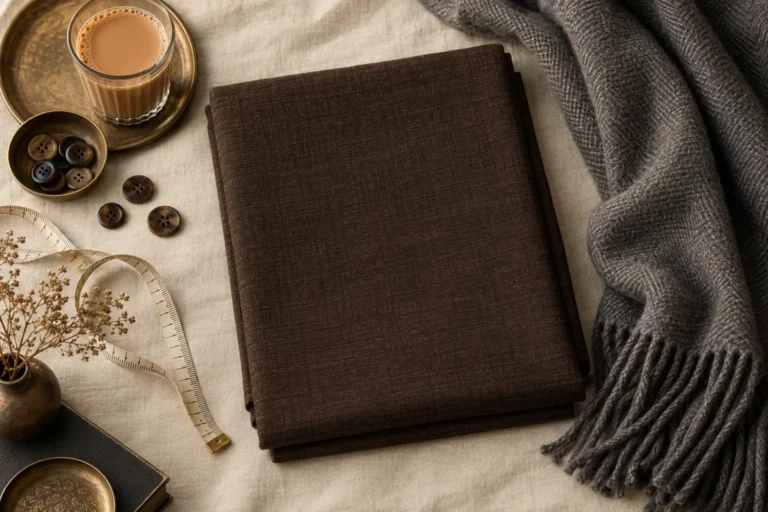
Karandi is a textured weave with a slightly grainy, dry handfeel. Run your fingers across it and you feel a fine, uneven surface, almost like a soft version of a sack weave. That texture is the first thing people notice, and it is also what gives a karandi kameez its quiet, rich look from a distance.
It is usually woven from cotton, often blended with synthetic or wool fibres depending on the quality. Compared to a smooth summer fabric like latha or lawn, karandi is thicker and denser. Compared to khaddar, it is generally finer and smarter looking.
A few traits you can expect from good karandi:
- Body: it has more weight than summer cotton, so the kameez falls straight and holds its shape.
- Texture: the grainy surface hides small creases, so it looks tidy through a long day.
- Warmth: the denser weave traps a layer of warm air close to the body.
- Matte finish: no shine, which suits earthy and deep colours very well.
Karandi fabric for summer or winter: the honest verdict
Think of karandi as an autumn and winter fabric with a long shoulder season. It earns its place in your wardrobe when the air turns dry and cool, and it keeps working right through the cold months unless your city gets truly bitter winters.
In summer, it struggles. The same density that keeps you warm in December stops sweat from escaping in June. In humid heat, a karandi kameez can start to feel heavy and slightly scratchy by midday. You can wear one to an air conditioned dinner in summer, but it is not a fabric you would choose for a hot afternoon outdoors.
Why it is not a heavy winter fabric either
Karandi is warm, but it is not the warmest. For really cold places, khaddar and wool blends do more. If you want to understand that heavier end of the scale, our guide to khaddar shalwar kameez for men covers it in detail. Karandi is the fabric you reach for when khaddar would feel like too much.
Where karandi sits among other fabrics
It helps to picture the common shalwar kameez fabrics in a line, from coolest to warmest. This is a general guide, since quality and weave vary between mills:
- Latha and fine cotton: light, breathable, made for heat.
- Wash and wear: smooth and easy to maintain, worn across many months.
- Cotton blends: a middle ground that works in mild weather.
- Karandi: textured and warm, the start of the winter range.
- Khaddar: thick, handloom style, very warm.
- Wool blends: the warmest and most formal.
If your heart is set on one suit that you can wear across most of the year, karandi is not that suit. A wash and wear such as our Premium Wash & Wear in charcoal grey covers more months. Karandi is better as a dedicated cold weather piece.
How your city changes the answer
Pakistan’s winters are not the same everywhere, so the same suit gets very different use depending on where you live.
Karachi and the coast
Winters here are mild and short. Karandi works well for evening events, weddings and those few genuinely cool weeks. On a sunny winter afternoon it can still feel warm, so in Karachi it often ends up as an evening and occasion fabric.
Lahore, Multan and the plains of Punjab and Sindh
This is where karandi really shines. The foggy, dry winters suit it perfectly, and you can wear it daily from late autumn until the weather turns. Add a waistcoat or a shawl on the coldest mornings.
Islamabad, Peshawar, Quetta and the north
Karandi is comfortable for autumn and early spring here. In the depth of winter, it works best as a base layer under a heavier waistcoat, coat or shawl. For the coldest days, khaddar or a wool blend.
When to wear a karandi shalwar kameez
Because of its texture and matte look, karandi sits comfortably between casual and formal. That flexibility is a big part of its appeal.
- Winter weddings: especially mehndi and valima functions, paired with a contrasting waistcoat.
- Jummah in the cold months: dignified without being flashy.
- Office wear: it looks neat all day and does not show creases easily.
- Family visits and dinners: warm enough for chilly evenings outdoors.
For a very formal winter event, such as a barat or nikkah, you may want a smoother, darker fabric. The Wool Blend in jet black is a good example of that more formal end.
Choosing a colour for karandi
The grainy texture of karandi gives colours a soft depth that flat fabrics do not have. Earthy and deep shades tend to look best: olive, rust, mustard, brown, charcoal and deep green. Lighter shades like cream also work, though they show the texture more strongly.
Olive green is a classic choice for a reason. It pairs with black, brown, cream and grey waistcoats, and it looks just as good with a plain shawl. Our Karandi shalwar kameez in olive green is cut and stitched to order, so you can pick a standard size or give your own measurements.
If you plan to wear a waistcoat, choose the waistcoat after the kameez. A textured kameez looks best with a smoother waistcoat, or with one in a clearly different shade. Our post on shalwar kameez with waistcoat combinations goes into pairing in more depth.
Caring for karandi so it lasts
Karandi is not a fussy fabric, but a little care keeps the texture looking fresh for several seasons.
- Wash in cool or lukewarm water. Hot water can make blended fibres lose their shape.
- Turn the kameez inside out before washing to protect the surface texture.
- Avoid wringing hard. Press water out gently and hang to dry in shade.
- Iron on a medium setting, from the reverse side, so the face keeps its matte look.
- At the end of winter, store it clean and fully dry, folded with a cloth around it.
Fit matters more with heavier fabrics
A thicker fabric shows fit problems more than a light one. A karandi kameez that is too tight across the chest pulls and creases, and one that is too loose looks bulky, especially once you add a waistcoat on top.
If you plan to layer, leave a little room across the chest and shoulders. Our size guide on how to measure walks through each measurement step by step. If you are between sizes, custom measurements are the safer route for a winter suit.
Frequently asked questions
Can I wear karandi in summer?
You can, but you will rarely want to. It feels warm and dry in the heat, and it does not let sweat escape the way cotton does. In summer, it only makes sense for short, air conditioned events in the evening.
Is karandi warmer than khaddar?
Generally no. Khaddar is usually thicker and warmer, while karandi is finer and smarter looking. Karandi is a good choice for mild to cool weather, and khaddar for proper cold.
Does karandi wrinkle easily?
Not much. Its textured surface hides small creases well, which is one reason men like it for long days at work or at a wedding. A quick press on a medium setting is usually all it needs.
Is karandi fabric itchy?
Good karandi has a dry, grainy feel but should not be itchy. Blends with more synthetic or wool content can feel slightly rougher, so if your skin is sensitive, a light vest underneath helps.
Is karandi suitable for formal events?
Yes, especially winter weddings, mehndi and valima functions. In deep colours with a well chosen waistcoat it looks dignified. For the most formal events, a smoother wool blend may suit better.
Ready for the cold months?
Once you have settled the karandi fabric summer or winter question for your own city, browse our winter collection to see it alongside khaddar and wool blend options. Every suit is stitched to order by our tailors in Karachi, in sizes S to XXL or to your own custom measurements, and we call you to confirm the order, size and dispatch date before stitching begins.
Payment is cash on delivery across Pakistan, and our shipping and returns page explains how it works. Still unsure which fabric suits your city? Send us a message on WhatsApp and we will help you choose.